How Do Porn Stars Last So Long? The Honest Answer
If you have ever watched a scene go twenty or thirty minutes and thought something is wrong with you, start here. The question "how do porn stars last so long" almost always comes from a quiet place of comparison, and that comparison is built on a false premise. What you are watching is not one continuous, effortless act. It is a produced performance, cut and arranged to look that way.
So let me answer the question you actually came with, the same one behind "how do male porn actors last so long" and "how do men last so long in porn": they often do not. Not in the way the final clip suggests. Once you see how those scenes are made, the pressure you have been putting on yourself starts to make a lot less sense.
What you are actually watching
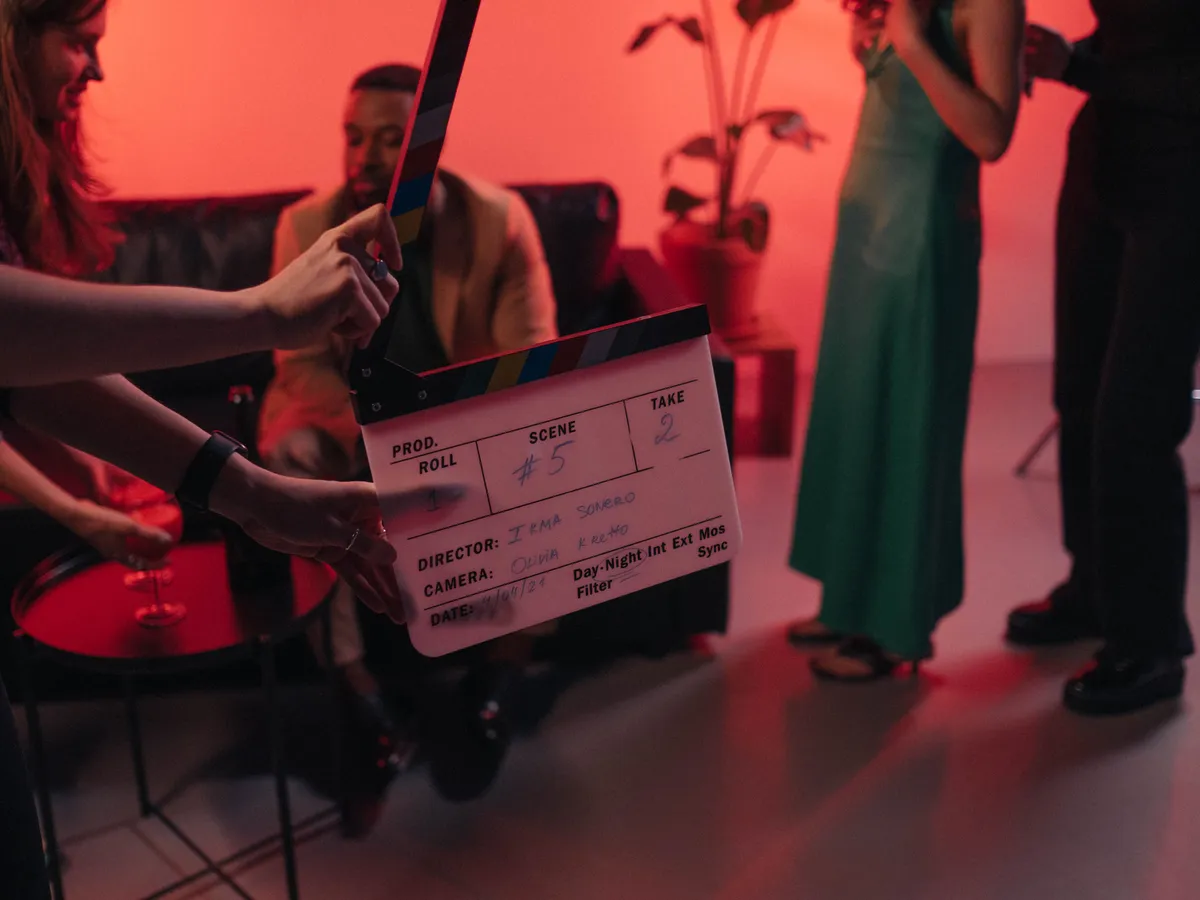
The single biggest reason is editing. A scene that plays as twenty unbroken minutes is stitched together from many separate takes, often filmed over several hours, with the camera repositioning and the performers resetting in between. Reporting on adult sets describes shooting days that run anywhere from a few hours to sixteen or more, where the actual intercourse is a small fraction of the time and the rest is setup, angles, and waiting. The cuts you do not see are doing the heavy lifting.
Inside those hours, the reality is far more human than the edit lets on. Performers lose erections under bright lights, on a crowded set, with a director calling out instructions. They stop, recover, and start again. There are long breaks built into the day. None of that survives to the final cut, because the final cut is engineered for one thing: a smooth visual result.
Then there is help that the camera never shows. Many male performers use erection medication, and some use injections, specifically because maintaining an erection on demand for hours under that kind of pressure is genuinely hard. That is a working condition of the job, not a window into normal sex.
What reaches your screen is selected and assembled for effect. Treating it as a measurement of how long a real encounter should last is like timing a movie fistfight and concluding you are unfit because you cannot fight for nine straight minutes.
Two more things shape what you see. Experience: performers do this for a living, and like anyone who repeats a skill thousands of times, they have a degree of control and desensitization that a typical person has not trained. And selection: the industry hires people who can perform reliably on camera, then films them at their best and discards the rest. You are seeing a curated highlight, filtered twice.
Why the comparison quietly works against you
Here is the part that matters most for you, beyond the trivia. When you hold yourself against an edited fantasy, you create a gap you can never close, and that gap turns into performance anxiety. Anxiety is not just a bad feeling. It is physical. It tightens your body, speeds your heart, and pushes you toward the finish faster, which is the exact opposite of what you want.
So the comparison does real damage. The belief that you should last as long as a man on a screen makes you tense and watchful in the moment, and that tension shortens the very thing you are anxious about. You can end up finishing faster precisely because you were worried about finishing fast. The fix is not to try harder against an impossible standard. It is to drop the standard and replace it with a realistic one.
What lasting actually looks like, and how it is built
Real numbers help recalibrate. In a multinational study that had couples time themselves with a stopwatch over four weeks, the median time from penetration to ejaculation was about 5.4 minutes, with a very wide spread from under a minute to well over thirty. Read that again. The middle of the range for ordinary men is a few minutes, not the half-hour a scene implies. If you have been measuring yourself against twenty minutes of edited footage, you have been failing a test that nobody actually passes.
The median real-world time from penetration to finish is around five minutes, not the half-hour a produced scene implies, so the benchmark you are using does not exist.
The genuinely good news is that control is a skill, and skills respond to training. The difference between a performer's apparent composure and ordinary nerves is mostly conditioning, and you can build the same calm without a film crew or medication. That is the whole idea behind our four-pillar program: slow breathing to take the urgency down, a trained pelvic floor to give you a physical brake, attention that you steer away from the panic and onto the moment, and specific techniques you rehearse so they are automatic when it counts. Across twelve weeks you find your own point of no return, practice backing off it, and stop treating orgasm as the inevitable end of sex. That is what actually lasting longer is, and unlike a film edit, it is real and it is yours.
This article is educational and is not medical advice. If you experience pain or discomfort, stop and speak with a doctor.